The attention economy, visual trust and the role of the expert in the AI era
How the convergence of IT, media and marketing changes the logic of digital production: AI, the expert's responsibility and the visual as an interface of trust.
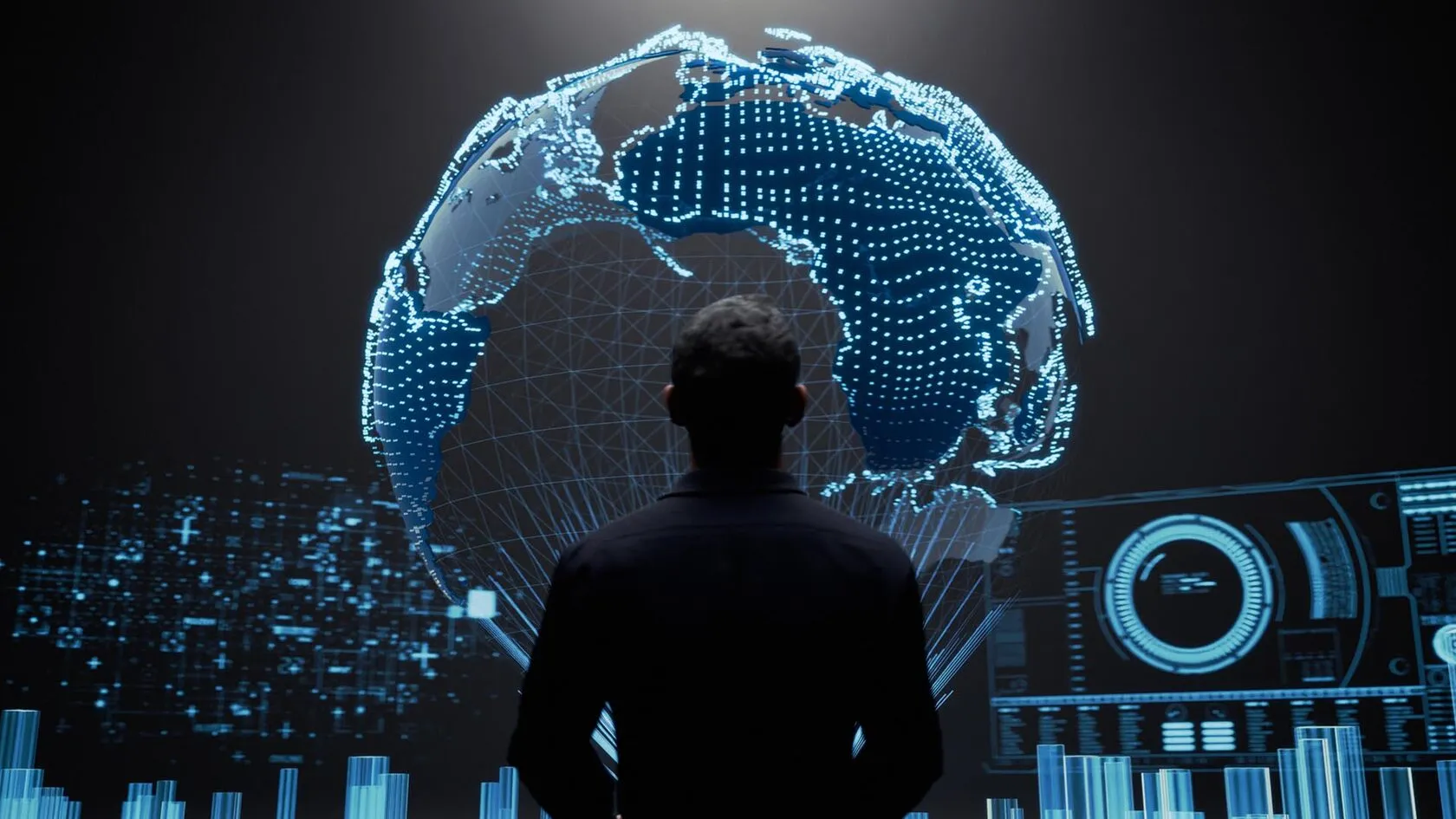
How the convergence of IT, media and marketing is changing the logic of digital production
In recent years digital technology has been developing faster than our ways of understanding it. AI, real-time engines, CGI, interactive environments and automated pipelines are increasingly seen as tools of acceleration: ways to do more, faster and cheaper. In practice, however, a more fundamental shift is taking place. What changes is not the speed of production but the logic of decision-making, the distribution of responsibility and the role of the expert in the digital ecosystem.
We live in the age of the attention economy, where it is not products or technologies that compete but interpretations of reality. Users increasingly analyse specifications less and trust feelings more. In this context the visual stops being a decorative layer and becomes an interface of trust between a complex technology and a person.
AI as a change in the logic of responsibility, not just an automation tool
The common idea of AI as a way to speed up production oversimplifies the real picture. Yes, generative models cut the time spent searching for visual hypotheses, composing scenes and developing early ideas. But the paradox is that as automation grows, so does the cost of a mistake.
AI can propose solutions, but it does not bear responsibility for their consequences. It does not understand the market context, the emotional expectations of the audience, cultural codes or the physical constraints of an environment. That is why the expert’s role does not disappear but transforms. Today an expert is not someone who does every step by hand, but someone who can manage the system: check, correct, make the final decisions and answer for the result.
The more automation, the higher the value of human thinking. Not intuitive and chaotic, but structured and critical, based on an understanding of physics, perception and psychology.
The convergence of IT, media and marketing as the new normal
CGI, motion design, UX, real-time visualisation and AI increasingly meet in one point. These are no longer separate disciplines or auxiliary tools but elements of product strategy. A modern digital product exists in several dimensions at once: as technology, as a service and as a visual experience.
Real-time environments allow you not only to demonstrate an object but to model scenarios of interacting with it. CGI stops being an illustration and becomes a way of explaining complex systems. Motion and light work not for dynamics but to manage attention. UX goes beyond interfaces and becomes part of spatial and visual thinking.
In this convergence a new type of digital production is born, where the visual is not “pretty” but clear, convincing and honest.
The visual as an interface of trust
People trust what they feel. Light, movement, scale, rhythm and materiality shape perception faster and deeper than text or specifications. That is why visual decisions directly affect trust in a product, a brand and a technology as a whole.
A bad visual can destroy trust even in a strong product. Not because it is “ugly”, but because it creates a sense of falseness, oversimplification or mismatch with reality. By contrast, physically plausible light, correct material behaviour and honest visual logic create a sense of reliability, even if the user does not realise it rationally.
In this sense the visual is a translation of complex technology into the language of human perception. It is a bridge between engineering and emotion, between code and trust.
The new role of the expert in digital production
A modern specialist can no longer be a narrowly functional performer. The market increasingly values those who can work at the junction of disciplines and understand the system as a whole.
Today the expert’s role is:
- understanding the physics of processes, not only tools;
- the ability to check automated decisions rather than trust them blindly;
- taking responsibility for the final result;
- the ability to speak to business, marketing and technology in one language.
This is especially critical when visual decisions directly affect product strategy, user experience and brand perception.
Humanity as the key value of technological progress
It is important to stress that this is not about setting humans against machines. Modern technology gives incredible power and widens the limits of the possible. But without human experience, a physical perception of the world, and an understanding of space, light, movement and emotion, that power stays empty.
Technology strengthens people only when it is built into a meaningful system of values. Otherwise it produces noise, not meaning.
My position is simple: the future of digital production belongs to specialists who keep their humanity in working with technology. Who use AI as a tool for thinking, not as a replacement for responsibility. Who understand that trust cannot be generated automatically; it can only be built through an honest, thoughtful and respectful visual language.
In place of a conclusion
We are entering a period when the quality of digital solutions is determined not by the amount of technology but by the depth of understanding of processes. The attention economy demands precision, visual trust and responsibility. The convergence of IT, media and marketing is forming new professions and new requirements for experts.
It is at this point that an opportunity appears not just to create visual products but to shape a culture of digital interaction that is more conscious, honest and human.
First published in Russian on Astana Hub; translated into English.