What happens to your mindset when you work on a laptop near the border?
An interview recorded in Kashmir, on the border of India and Pakistan, and what travelling as a digital nomad does to the depth of perception and professional thinking.
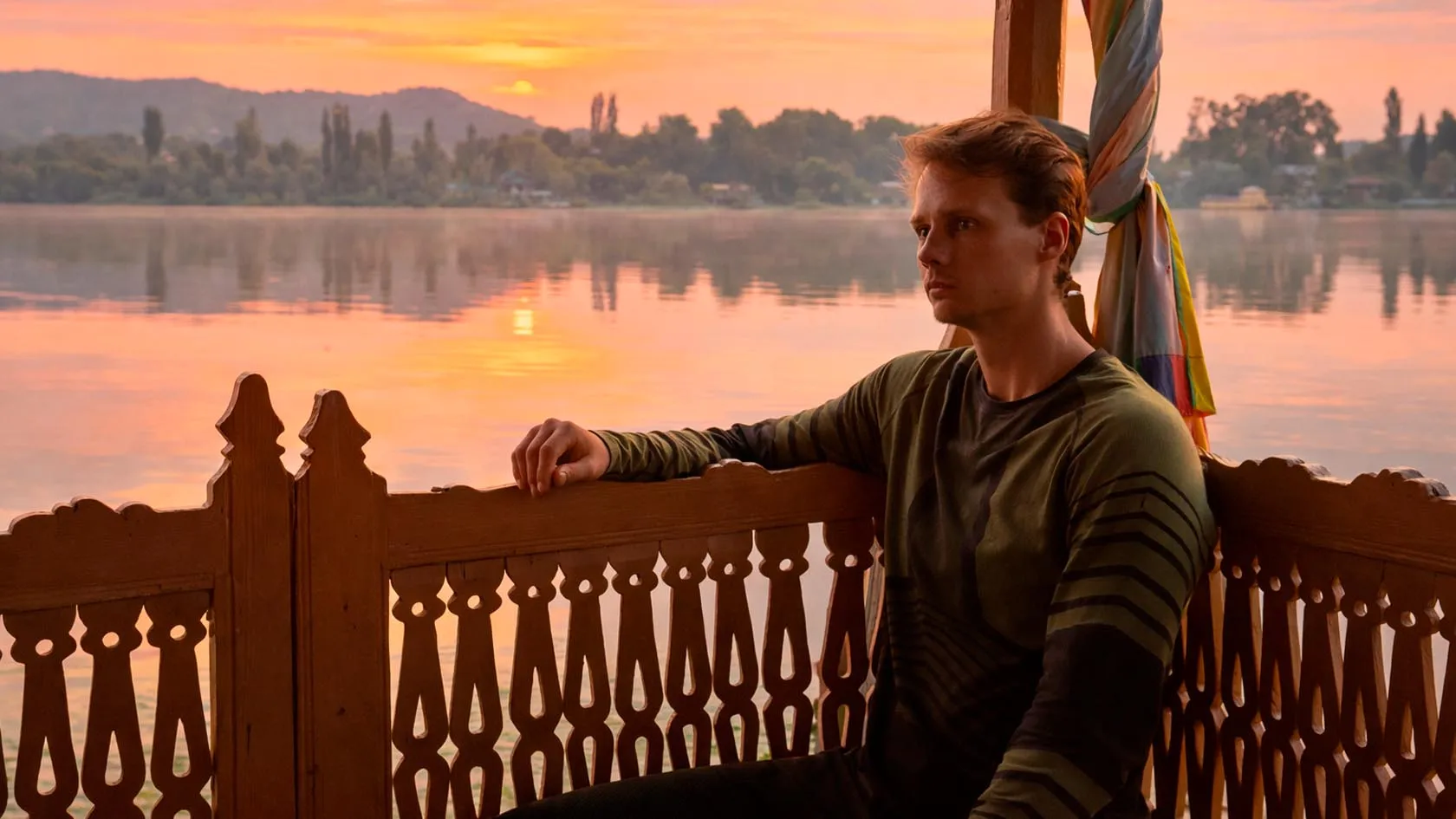
I recently recorded an interview in a region that has been a zone of difficult dialogue for decades: Kashmir, on the border of India and Pakistan. For me, though, this trip was not about politics, and not about loud statements. It became a professional and personal study of how the environment shapes thinking, and how travel deepens perception.
I am a digital nomad. I work remotely, build projects online and consciously choose a mobile way of life. Over the past year my route has run from Central Asia to South Asia, from the steppes of Kazakhstan to mountain regions where questions of identity, culture and the future are especially sharp. The further I go, the more clearly I see that travelling is not an escape from reality but a way of seeing it more widely.
A line on the map, a space where people live
In Kashmir I found myself next to a line that looks like a border on the map but in reality is a space where people live, with their fears, hopes, traditions and daily tasks. It was here that I felt especially strongly that behind every geopolitical process there are specific human stories.
As a digital nomad I am used to working on the road: interviews, texts, video and analytics are all made not in an office but on the move. But there are places where you cannot stay superficial, where every word demands responsibility. This was one of those cases.
In the interview I deliberately took the position of an observer. Not an expert, not a representative of any side, but a person who listens. That is one of the main professional lessons of travel: the ability to hear, not only to speak.
What constant movement teaches
Constantly changing countries and cultures develops contextual thinking. You begin to see how relative our habitual patterns of perception are. What seems obvious in one country can be completely different in another. That widens your horizons, not in the abstract but in practice.
Travel teaches:
- adaptability: to find your way quickly in new systems, rules and cultures
- empathy: to understand people beyond stereotypes
- strategic thinking: to see processes not in a line but in layers
- communication: to find a common language where at first it seems there is none
Working in different countries, from Kazakhstan to India, I am more and more convinced that global thinking is formed not in theory but in real meetings. When you sit at one table with people from another culture and talk about life, work and the future, borders become not dividing lines but points of contact.
Mobility is not the point
For me, digital nomadism is not freedom for its own sake. It is a way to widen my professional and personal horizons on purpose: to work effectively outside the usual infrastructure, to stay resilient in uncertainty, and to stay focused even when there is a complicated history around you.
Travelling through South Asia and watching tense regions, I was once again convinced that the world is deeper than the headlines. If we want to make mature decisions in business, in projects and in partnerships, we need cultural sensitivity and the ability to see the many dimensions of a process.
Remote work today lets us be mobile. But mobility on its own changes nothing unless inner growth stands behind it. My conclusion is simple: travel is a powerful tool of professional development. It widens your strategic vision, strengthens emotional intelligence and teaches you to work in an uncertain environment. These are exactly the competencies that are becoming key in the modern world.
Sometimes, to begin thinking globally, it is enough to step outside your usual geography.